
Hey everyone,
Quick check-in while we're grinding away on the docuseries (the free one heading to YouTube soon, to spread real, respectful knowledge about this craft).
I wanted to share something that's been on my mind a lot lately: how different filming and using footage actually is in Japan compared to most other places I've worked.
If you're used to grabbing clips from public events or social media and just running with them, that's pretty standard in a lot of countries. Here, as a registered Japanese company, we have to get clear permission from pretty much everyone involved — the location owner, anyone who appears (even in the background sometimes), the craftsman whose work or workshop shows up, even the owner of any identifiable item in frame. Sometimes, even the city it was filmed in itself — which felt crazy to need to do, but it's a real thing.
Even for just BTS photos and videos or a disappearing story that I might share on Instagram, the video and images here might need permissions from all possible parties.
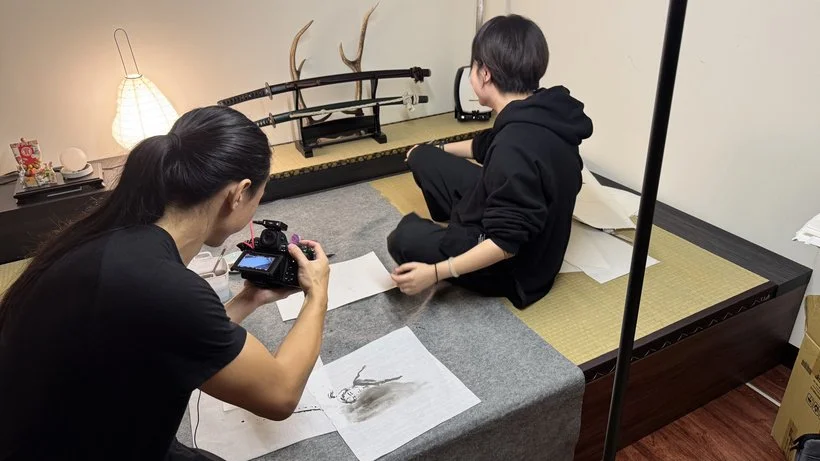
This applies to material already out in public online, posted by others, or used by individual creators or foreign companies. The rules hit us differently because we're operating under Japanese law long-term, and we're committed to handling everything above board to build trust and sustainability in the industry.
To give you the real picture (and why we take it so seriously), Japanese law protects "portrait rights" (shōzōken), which comes from privacy protections in the Constitution and civil law. Publishing someone's recognizable image without consent can be seen as an infringement if it causes any distress or is used commercially. This is why anything on Japanese TV will blur out so much, faces, logos, everything.
In the US, for instance, people that appear in public are generally assumed to have no reasonable expectation of privacy in public spaces, so you have the right to film there (as long as you're not invading a clear private area, like peeping into someone's home). Filming in public is protected under the First Amendment in many cases, but publishing can still trigger issues if it's defamatory or invades privacy in specific ways.
There are certainly some positives to this level of strictness as well, of course, and as another contrast — often a verbal "no problem" is all you need in Japan. Their word is good enough; no contract or even digital trail (which kinda blows my mind) is necessary.
In Japan, renowned craftspeople also have stronger "right of publicity" elements (backed by court decisions) that protect the commercial value tied to their name, appearance, and reputation — especially when it involves economic interests like customer appeal.
There's no broad "fair use" like in the US. In the US, if you're criticizing, commenting, or discussing any topic, you're often allowed to pull reasonably small pieces from copyrighted material and use it in your content as long as the bulk and the heart of the work is your own creation — it's judged case-by-case on four factors (purpose, nature of the work, amount used, and market effect).
This is not the case in Japan. Even a brief half-second of showing basically anything, be it a public parade or performance even, generally cannot be used without consent.
Locations often require permits too, especially in controlled or tourist areas. So we must clear everything properly upfront. It's not optional for us if we want to do this right and sustainably — and honestly, it adds layers of research and outreach that can stretch timelines by weeks or months. We've unfortunately had to throw out a LOT of good material, since this project started before I set up the company.
Here's a real example that drove the point home for me, even knowing the rules. It honestly highlights just how uneven the playing field can feel.
-----------
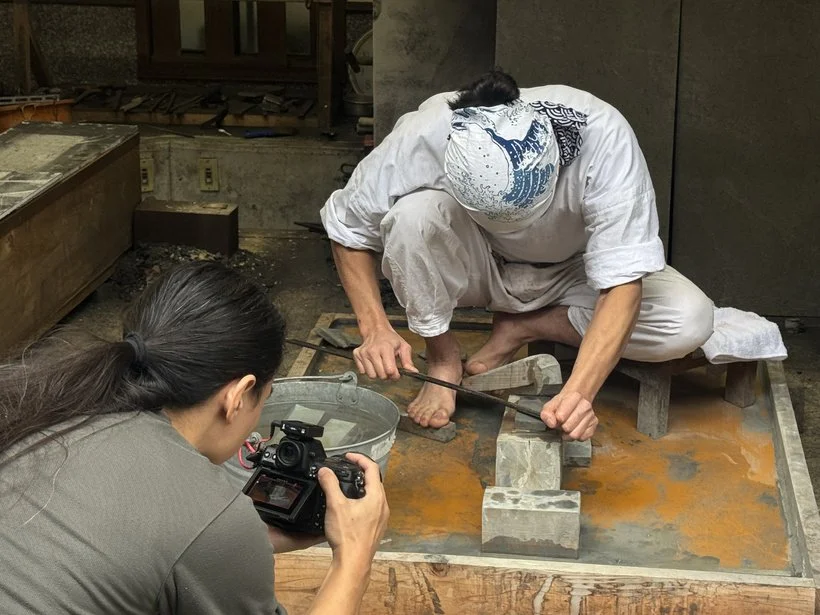
There was a short public clip — about 3 seconds — from an event where Mark Zuckerberg was working with a katana kaji (swordsmith). It had been shared widely: Zuckerberg's own posts on Instagram, picked up by news outlets, social media reposts, even embedded by major international media.
Views were massive overall — around 50 million cumulative across platforms at the time I checked. It was everywhere, used freely by others without apparent issues. Seemed like fair game for a quick, respectful reference in our trailer to show the global interest in this craft.
I approached it carefully: contacted the swordsmith directly, sent only a private unlisted link, and asked politely for permission. No public posting, no assumptions — just a straightforward request to confirm it was okay. The language was written by a Japanese native, in business formal and respectful language.
The reply was a threat that he will report me — just for asking and sharing that private link to those who appeared in the footage. It wasn't a threat that if I didn't remove his segment, he would report me. No. It was already a reportable offense. He also said he would report us to katana associations as well, which could have a direct impact on our reputation and relationships.
That one hurt.
------------
Later, when I spoke with several other people in the industry about it, I got some real insight into why the response was so strong. It turns out the master has a very deep pride in his own school and lineage (something you see with a lot of top kaji), and because our docuseries centers on the Gassan tradition, there were natural comparisons and competitive dynamics at play — plus what others described as some longstanding tensions between certain lines.
These are exactly the kinds of personal and historical layers we outsiders could never have known about going in. Between the legal bar being higher for a Japanese company like ours (where we can't rely on the same leniencies others might get) and these unexpected industry dynamics, it can feel like the deck is stacked against us sometimes.
Other creators might slide by, reposting or embedding without a second thought; we can't, and we won't try to. It underscores how these protections, while important, create real barriers for local projects trying to promote the very culture they're guarding.
But this is the path we're on deliberately. We could look for workarounds. We choose not to. Every permission we chase, every careful conversation, every "no" we get — it's all part of building something authentic that actually helps preserve and share katana culture the right way.
That's what makes the docuseries worth watching and our future specialized tourism experiences feel genuine instead of rushed or exploitative. And on the flip side, when we do get those "yeses" after persistent, respectful efforts, it feels like a real win — strengthening relationships with the craftspeople and communities we're highlighting. Though sometimes they do have demands of their own that can be a bit challenging.
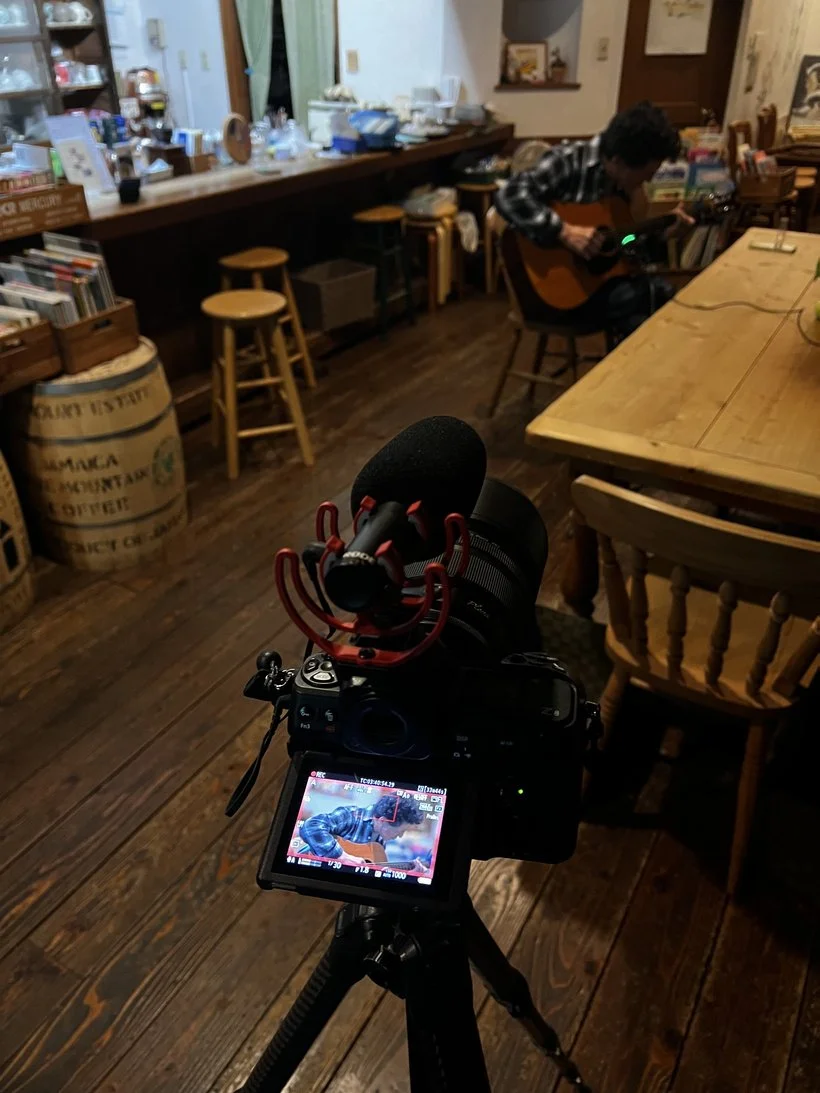
It's frustrating and slow, no question. But your support is what lets us keep pushing through these hurdles while keeping the main series free for everyone. It reminds me that we're not alone in this; we're building a community around preserving this tradition through education and experiences that give back. And yes, we have permission from everyone.
We're in this for the long haul: honest education, real respect for the tradition, and sustainable ways to support the people who keep it alive. Your backing makes that possible.
Thanks for sticking with us through the less glamorous parts. It really does mean a lot.
If you've dealt with permission headaches in creative work (especially in Japan), feel free to share below — always interesting to hear how it plays out for others.
More soon.
Appreciate you all,
Ken