
The Masters
The People Who make what we do possible
Everything at Kage Media runs through relationships that took years to build.
The people we work with have given their lives to a single practice. Most are not in the business of tourism. They are craftsmen and martial artists who work because their passion for their work demands it, not because an audience arrived. That these sessions are available at all is the result of time spent in their workshops, respect for what happens there, and trust built carefully over years.
We do not present them as specialists we have packaged. We introduce them as the people we have been given permission to learn from, and a reason to come to Nara.
The Forge Master
The Master of Ancient blade arts
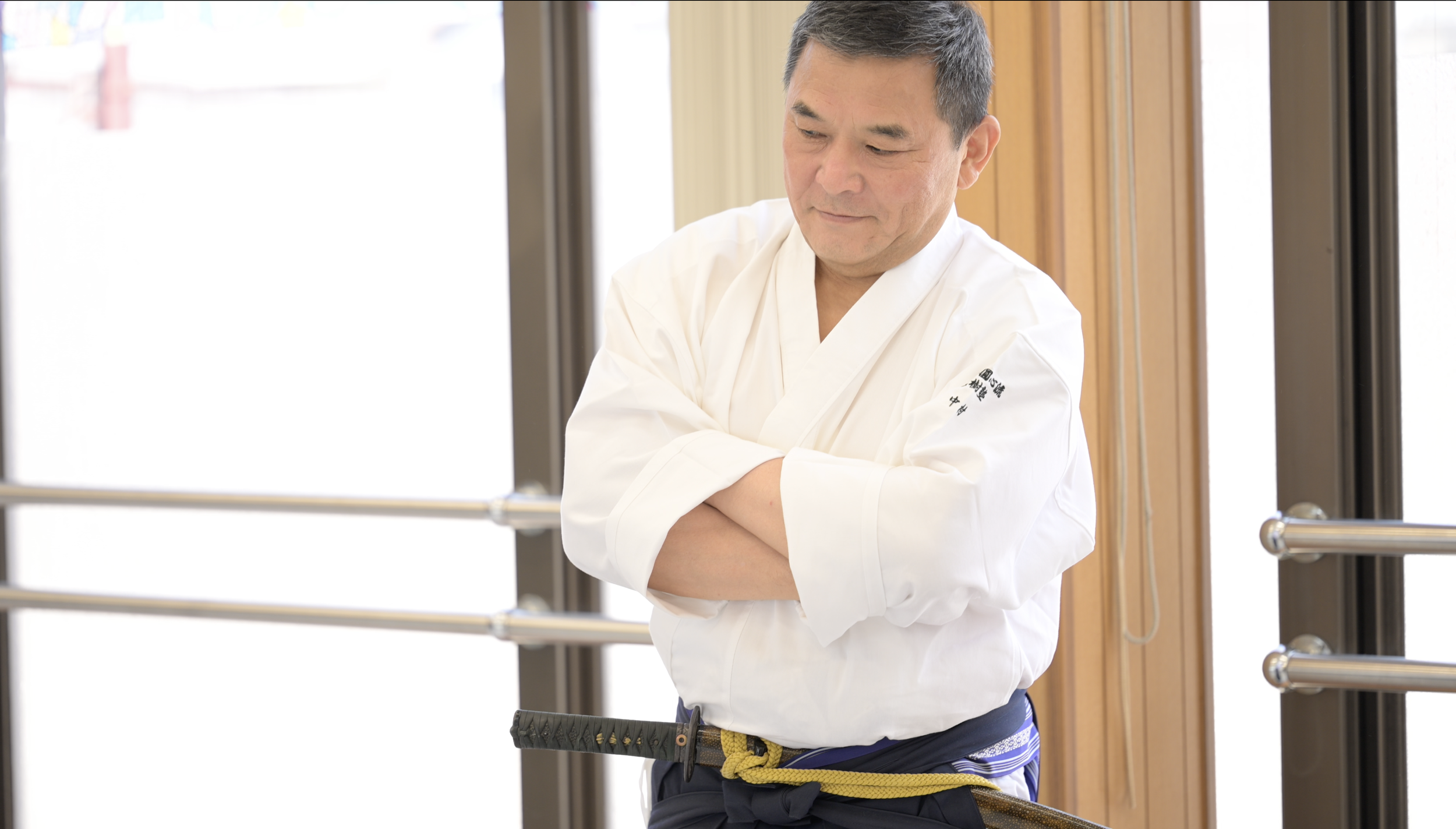
Nakamura Sensei is the most senior disciple of the late Sōke Fumon Tanaka, a respected multi-sōke (grandmaster) of several classical Japanese martial arts.
He is the denshōsha (inheritor and transmitter) of each tradition, holding menkyo kaiden (complete transmission) and the position of shike in:
Kukishin-ryū
Sōden Kukamishin-ryū
Enshin-ryū
Koden Enshin-ryū
He continues to preserve and teach these arts exactly as they were passed to him and training is offered in the classical Enshin-ryū tradition and related koryū.
Kukishin-ryū and Sōden Kukamishin-ryū are classical composite arts of sword, staff, and related weapons, transmitted as koryū (old schools). Their public histories are often mixed with other lineages of similar name; the instructor teaches the transmission he received, not a generalized internet version of the school.
Enshin-ryū and Koden Enshin-ryū are traditionally dated to the Sengoku period, around the reign of Emperor Ōgimachi (mid-to-late 1500s). Early authorities associated with the art include Hayami Nagato-no-kami Enshin, a hokumen-no-bushi (imperial palace guard), and Inugami Nagakatsu of Ōmi. The school developed armed grappling (kumiuchi) together with swordsmanship and, in later transmission, iai and the greatsword.
Sessions: Intermediate Iaido, Kenjutsu
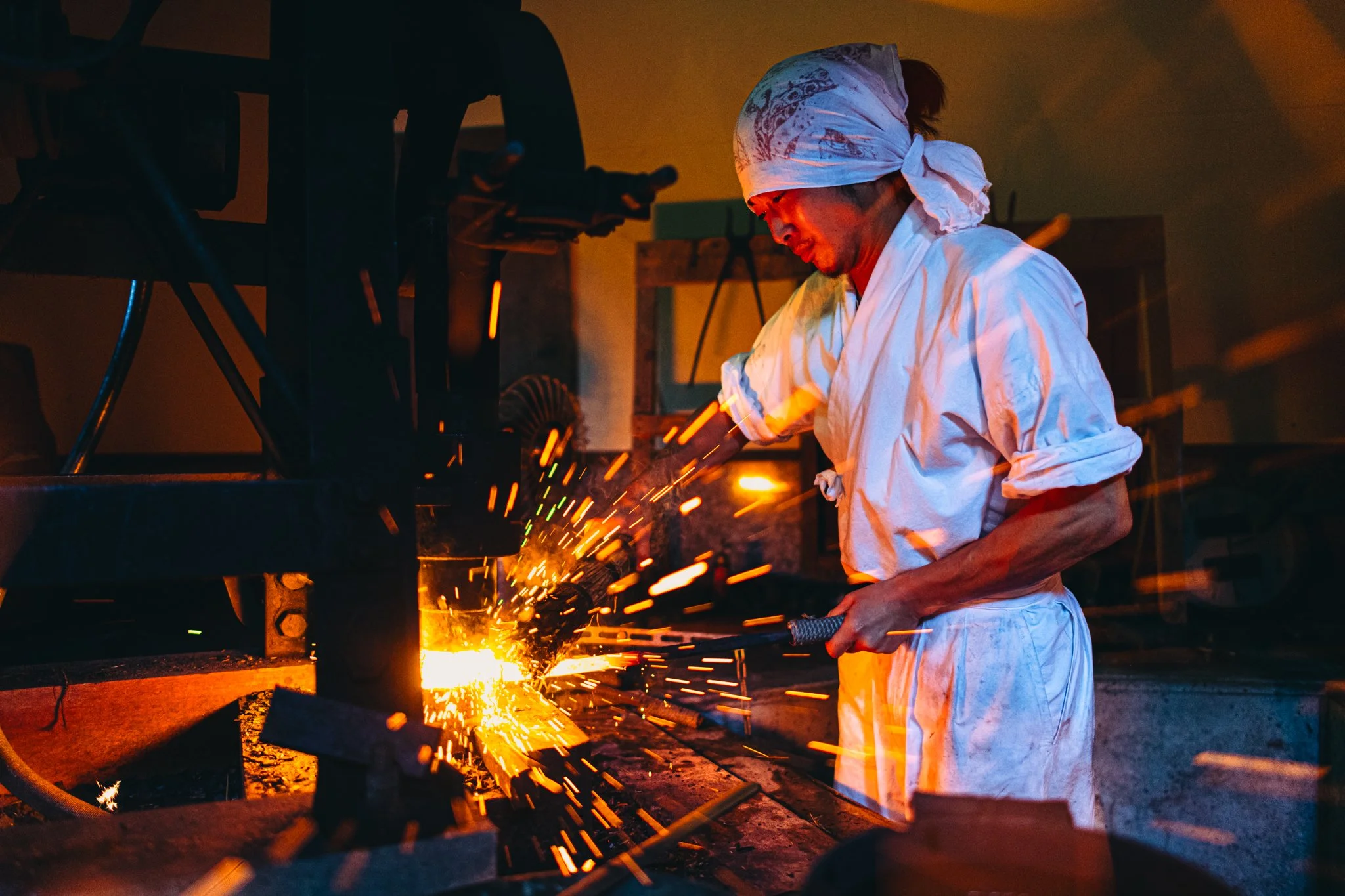
Hamakawa Sensei is a licensed Japanese swordsmith and member of the All Japan Swordsmith Association.
He finished his long apprenticeship under Gassan Sadatoshi of Nara — fifth generation of the Osaka Gassan line, and son of Living National Treasure Gassan Sadaichi II. The training lasted eight years, to the standard of a house that regards its transmission as never broken: from the old Gassan smiths of Dewa, through the Osaka generations, and down to the present. The family begins well before the Meiji ban on wearing swords, and it is widely treated as one of the principal living lines of Japanese sword-making, known especially for the distinctive ayasugi-hada of the Gassan tradition.
Hamakawa Sensei received approval from the Agency for Cultural Affairs to produce art swords in 2010, became independent in 2013, and was awarded the Newcomer Prize in the blade section of the 3rd New Japanese Swords and Swordsmith Crafts Exhibition, organized by the Japan Art Sword Culture Promotion Association. A blade of his is exhibited at the Kudoyama Sanada Museum in Wakayama.
Today Hamakawa Sensei continues to work with traditional methods and traditional materials, and makes blades to order rather than in quantity.
To be received here is to watch that work at close range, under a smith who learned from one of Japan’s most historic lines.
Sessions: Katana Forging
The Master of Polish
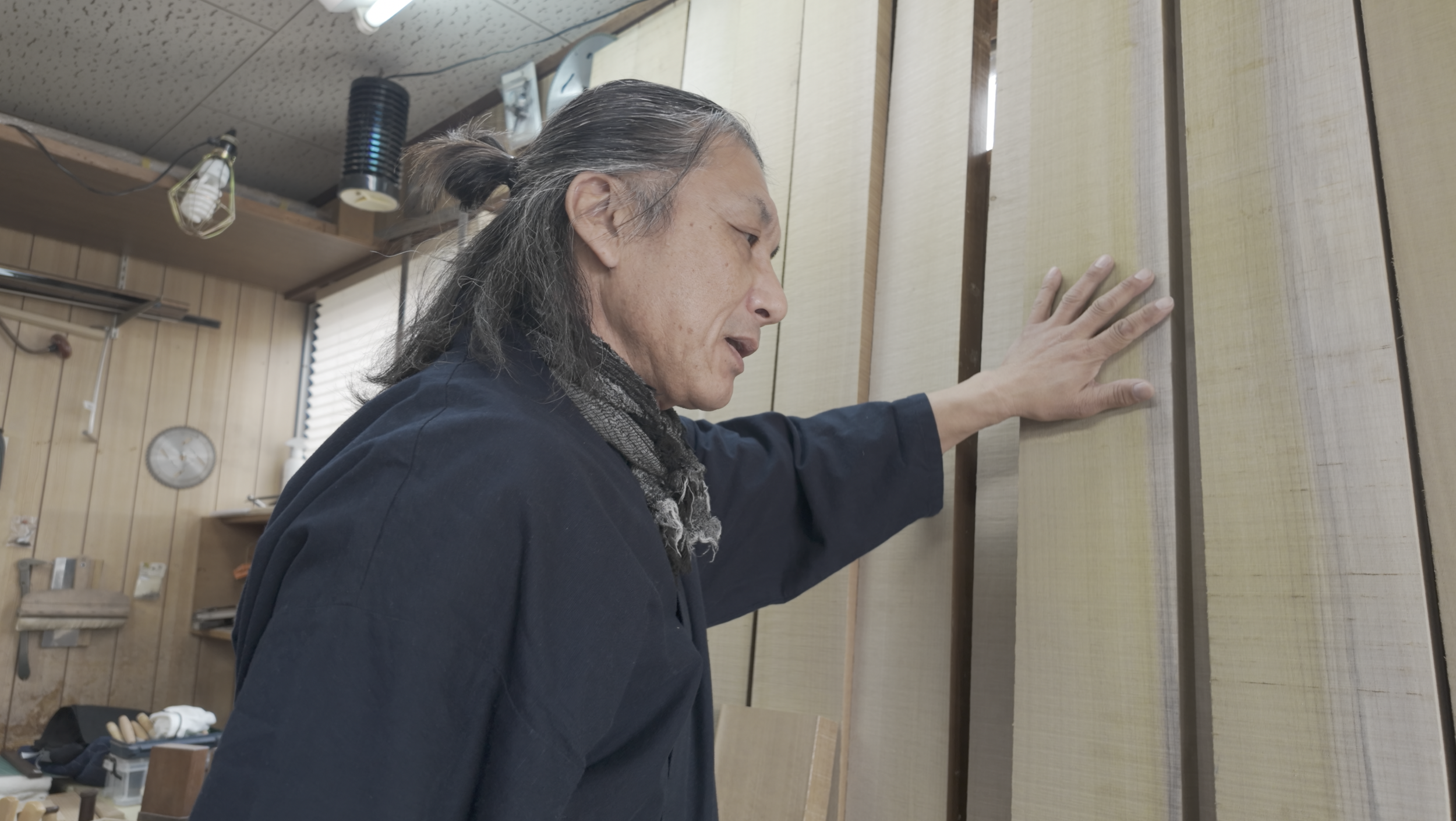
The Saya Master
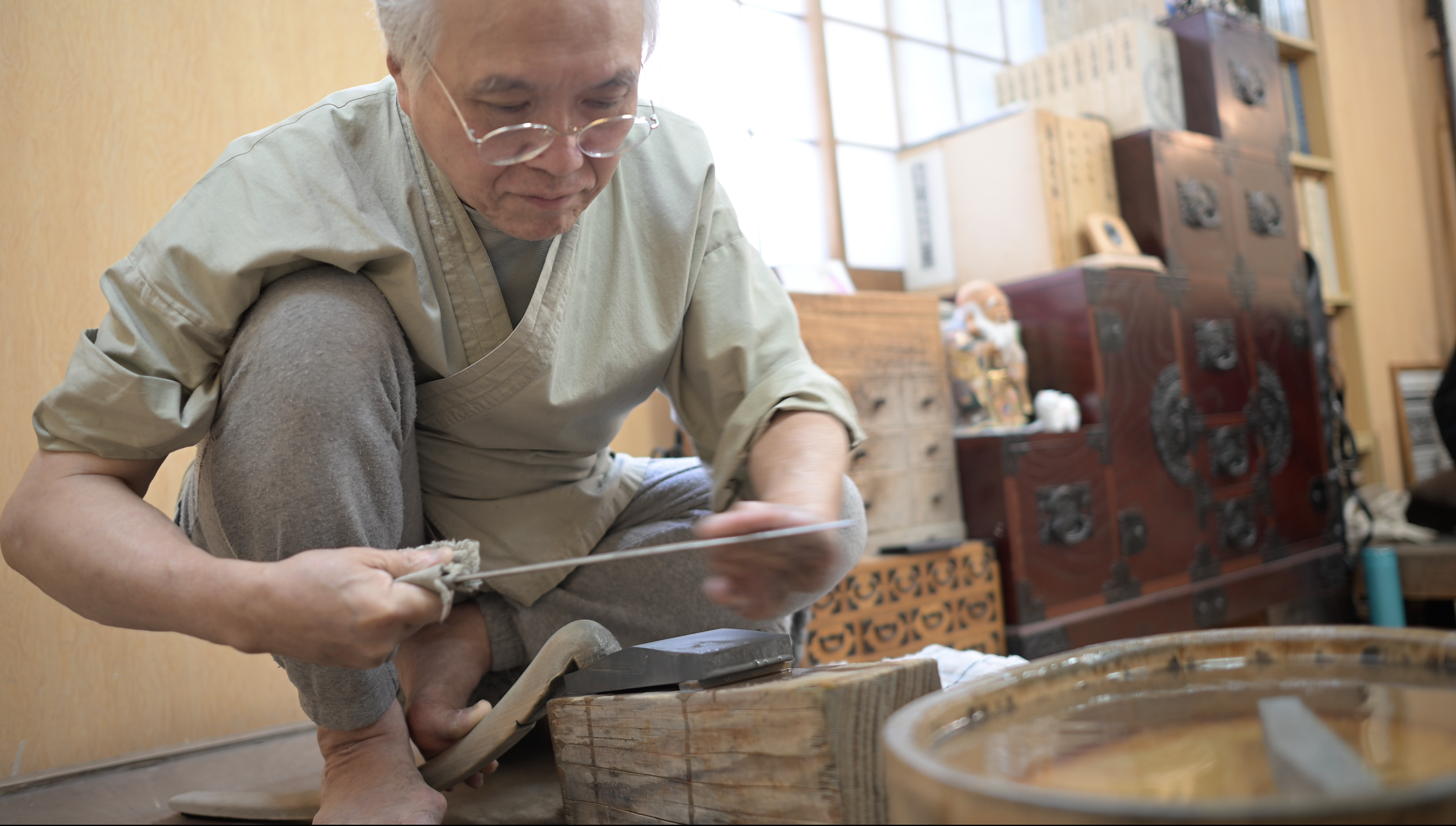
Manazu Sensei is a traditional Japanese sword polisher born in Kumamoto in 1950, he began his apprenticeship with his father at the age of fifteen. He has practiced the classical art of sword polishing ever since: not merely sharpening a blade, but drawing out its jihada, hamon, and character so that the smith’s work can be seen as it was meant to be seen.
He is a member of the Society for the Preservation of Japanese Art Swords (NBTHK) and of the Atsuta Jingū Sword Dedication Association. In 1996 he founded the Nihon Tō Masumikai; in 1998 he opened its polishing study group; and in 2008 he established the Katana Museum in Osaka’s Hirano district. He has received multiple awards in the NBTHK polishing competitions, including special prizes.
His documented work includes blades of unusual cultural weight: a tantō quenched under Prince Mikasa, a tachi dedicated at Ise Jingū, a sacred treasure sword of Sumiyoshi Taisha (an Osaka Prefectural cultural property), and more recently the treasure sword Kuninaga of Kuhonji Shrine. Over a career of many decades he has handled well over a thousand swords, including historically important pieces.
Master Manazu is known for teaching constantly. Disciples study with him in large numbers, including students from outside Japan.
To be received as a student in this workshop is an honor that is not given lightly.
Sessions: Polishing
Placeholder:
Hamakawa Sensei is a licensed Japanese swordsmith and member of the All Japan Swordsmith Association.
He finished his long apprenticeship under Gassan Sadatoshi of Nara — fifth generation of the Osaka Gassan line, and son of Living National Treasure Gassan Sadaichi II. The training lasted eight years, to the standard of a house that regards its transmission as never broken: from the old Gassan smiths of Dewa, through the Osaka generations, and down to the present. The family begins well before the Meiji ban on wearing swords, and it is widely treated as one of the principal living lines of Japanese sword-making, known especially for the distinctive ayasugi-hada of the Gassan tradition.
Hamakawa Sensei received approval from the Agency for Cultural Affairs to produce art swords in 2010, became independent in 2013, and was awarded the Newcomer Prize in the blade section of the 3rd New Japanese Swords and Swordsmith Crafts Exhibition, organized by the Japan Art Sword Culture Promotion Association. A blade of his is exhibited at the Kudoyama Sanada Museum in Wakayama.
Today Hamakawa Sensei continues to work with traditional methods and traditional materials, and makes blades to order rather than in quantity.
To be received here is to watch that work at close range, under a smith who learned from one of Japan’s most historic lines.
Sessions: Katana Forging
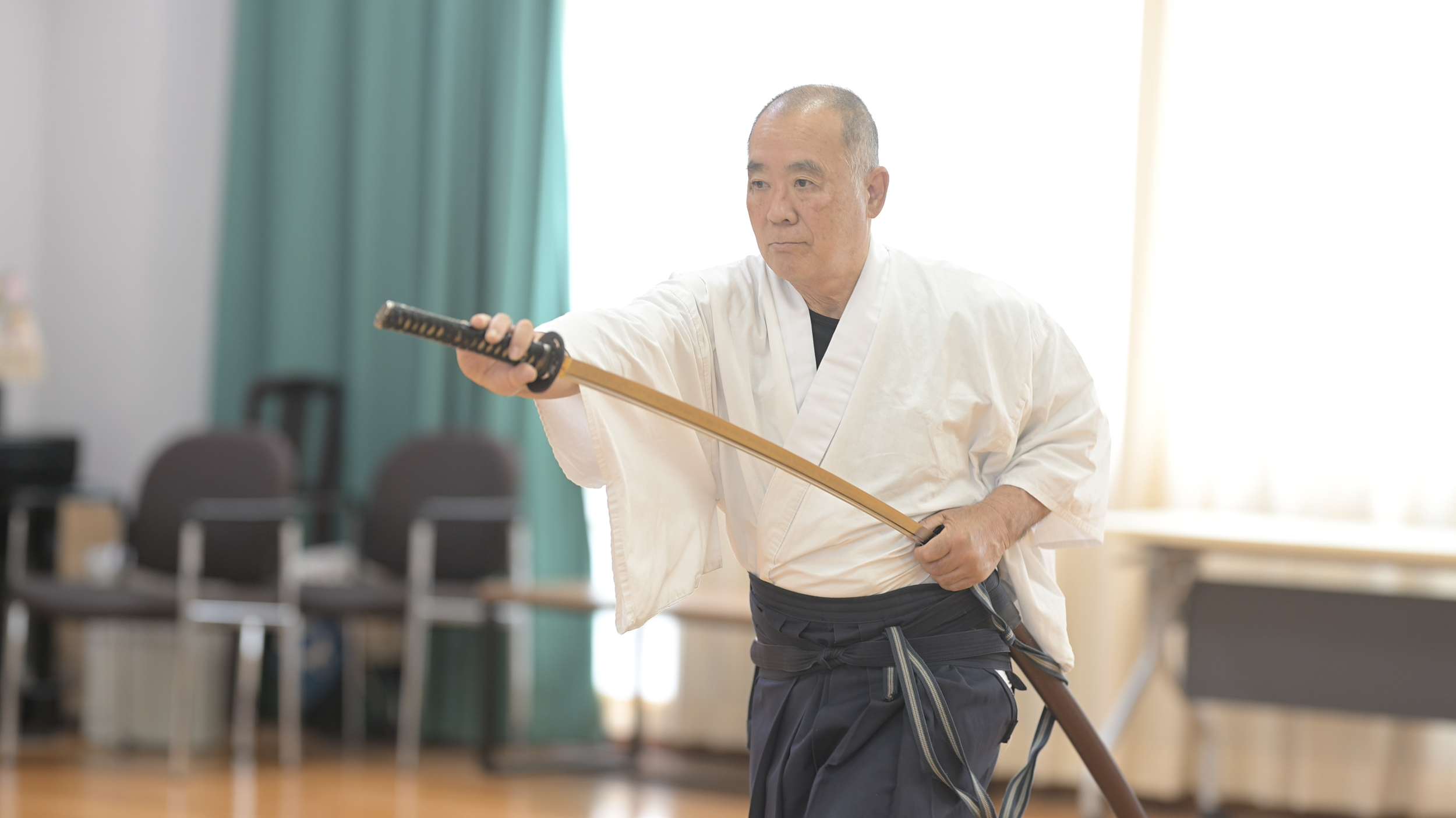
The Master of the Blade’s Soul
Yonekawa Sensei is a licensed instructor of Japanese swordsmanship and the head of Aikido Manyo-juku in Imai-cho, Kashihara, Nara — a historic temple town recognized as a Japanese Heritage site.
He first came to martial arts through karate and kenpo, then studied Muso Jikiden Eishin-ryu iaido under Ikeda Sensei, the 22nd headmaster of that classical school. He later trained in aikido under Watanabe Nobuyuki of the Aikikai Hombu Dojo. In 1983 he opened Manyo-juku, and he has taught there ever since.
He holds 7th dan in the Aikikai Foundation. He serves as chairman of the Mie Aikikai Federation and as a standing director of the Nara Aikikai Federation.
He teaches iaido and aikido as related disciplines of posture, timing, and courtesy rather than contest. The work is to refine the body and the mind together, to keep etiquette exact, and to train without display.
Sessions: Beginner Iaido, Aikido
